
3-Axis vs. 4-Axis vs. 5-Axis CNC Machining: Which One Does Your Project Actually Need?
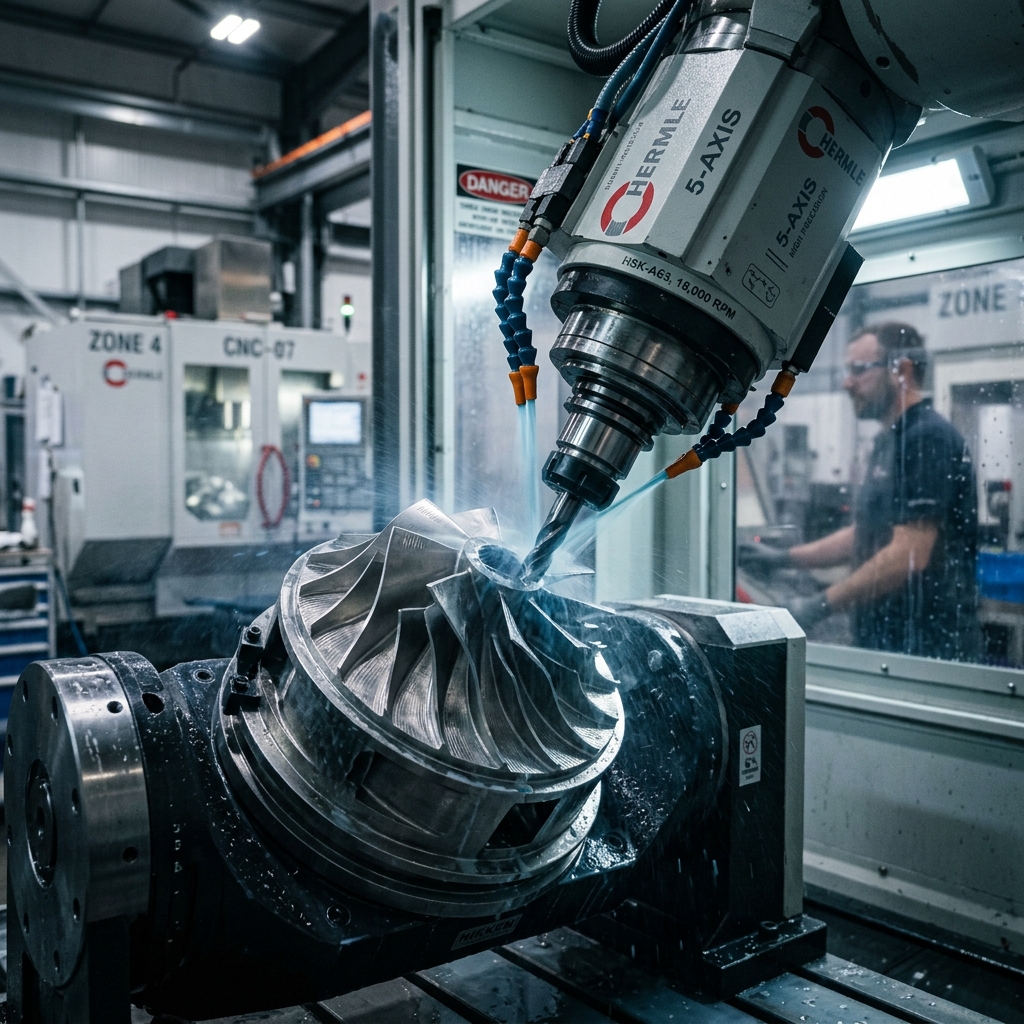
In the world of custom manufacturing, CNC milling machines are categorized by the number of axes along which the cutting tool or workpiece can move. Choosing the right axis configuration is a critical decision that balances component geometry, surface finish quality, setup times, and overall production costs. At ThinkToReality, our CNC milling centers range from high-speed 3-axis VMC machines to state-of-the-art 5-axis simultaneous cutting systems, allowing us to select the most efficient machining route for your design.
Many engineers assume that 5-axis machining is always the best choice due to its high precision. However, 5-axis VMC machine setup times and hourly operating rates are significantly higher than standard 3-axis machines. For simple geometries, choosing 5-axis machining is an unnecessary expense. This guide details when to use each axis type.
1. 3-Axis CNC Machining: The Cost-Effective Workhorse
3-axis CNC machines are the most common mills in the industry. The workpiece remains fixed on the machine bed, while the cutting tool moves along three linear axes: X (left to right), Y (front to back), and Z (up and down). This setup is highly cost-effective and ideal for planar parts, pockets, slots, and brackets. However, if the part requires features on multiple faces, the machinist must manually stop the machine, rotate the part, and recalibrate the coordinate system, which adds setup time and labor costs.
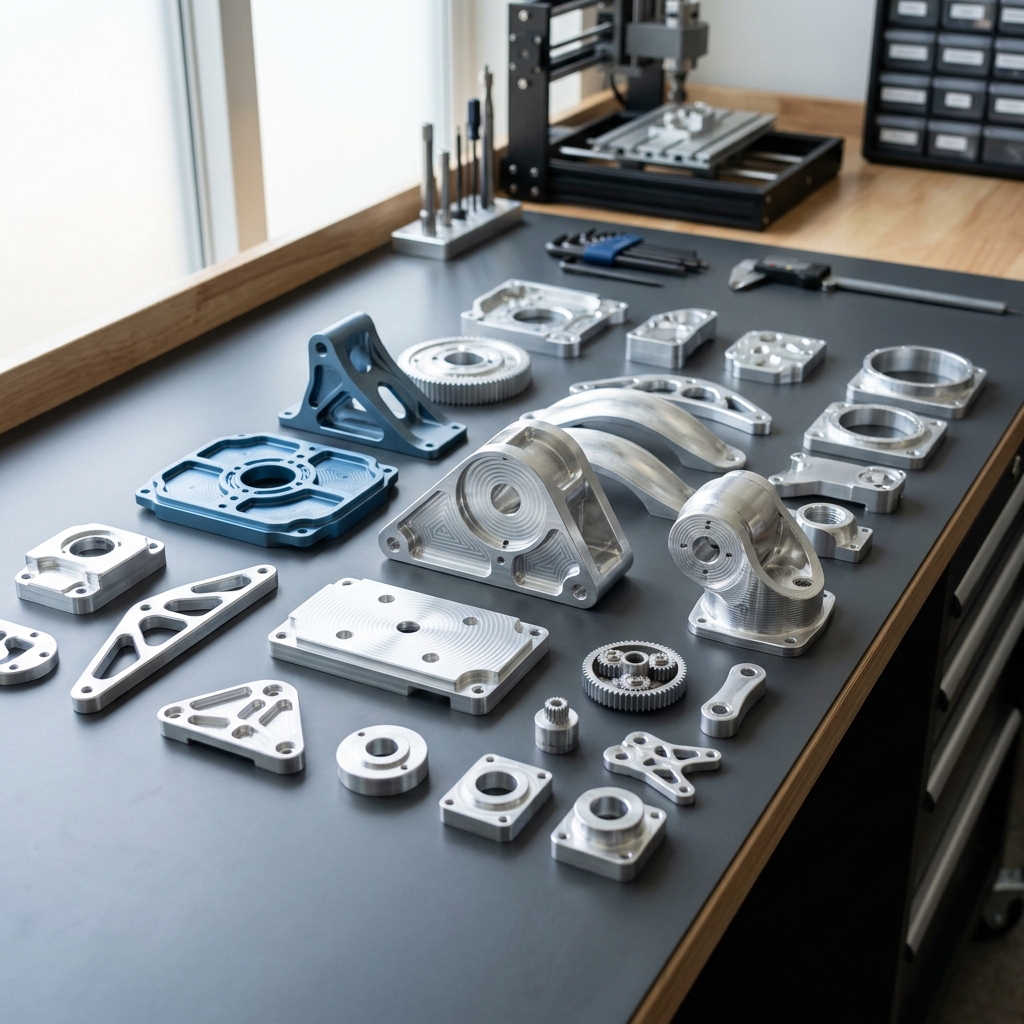
Precision finished aluminum aerospace components machined using multi-axis CNC milling centers.
2. 4-Axis CNC Machining: Adding Rotational Control
A 4-axis mill adds a rotary axis (typically called the A-axis) which rotates the workpiece around the X-axis. This allows the machine to access and cut features along the outer surface of a cylindrical part or drill holes on multiple faces of a block without manual repositioning. 4-axis machining is perfect for rotary shafts, helical gears, and parts requiring indexing on multiple sides, reducing labor costs and improving alignment accuracy.
3. 5-Axis CNC Machining: The Ultimate Geometric Freedom
5-axis simultaneous machines allow the cutting tool to move along three linear axes (X, Y, Z) while two rotary axes (A, B, or C) tilt and rotate the workpiece or spindle head. This dynamic movement allows the cutter to approach the part from any angle, enabling the machining of complex organic geometries, undercuts, and deep curved cavities in a single setup. 5-axis milling is essential for producing high-tech aerospace impellers, medical prosthetics, and automotive engine blocks where curvature and balance are critical.
Key Comparison Summary
Conclusion: Choosing Wisely
As a rule of thumb, start with 3-axis machining for simple, flat parts to keep costs to a minimum. Transition to 4-axis indexing for multi-sided parts, and reserve 5-axis machining only for organic shapes or parts where single-setup alignment is critical. Working with ThinkToReality gives you access to the full range of axis systems, ensuring your custom parts are milled using the most cost-effective and precise technology available.
Related Insights
Sheet Metal Design & Precision Fabrication Guide: DFM Guidelines, Bending Tolerances & Manufacturing in India
A definitive engineering guide to precision sheet metal design and custom fabrication in India. Learn essential DFM rules, K-factor & bend deductions, CNC fiber laser cutting, press brake forming, materials, and regional manufacturing across Delhi NCR, Pune, Bengaluru & India.
Industrial 3D Printing Services in India: Technologies, Materials, Costing & Scale Production Guide
A comprehensive guide to industrial 3D printing in India. Compare FDM, SLA, SLS, and DMLS metal technologies, engineering materials, cost calculations, and batch manufacturing workflows.