
Understanding Plastic Shrinkage and Warpage in Injection Molding: Causes & Prevention
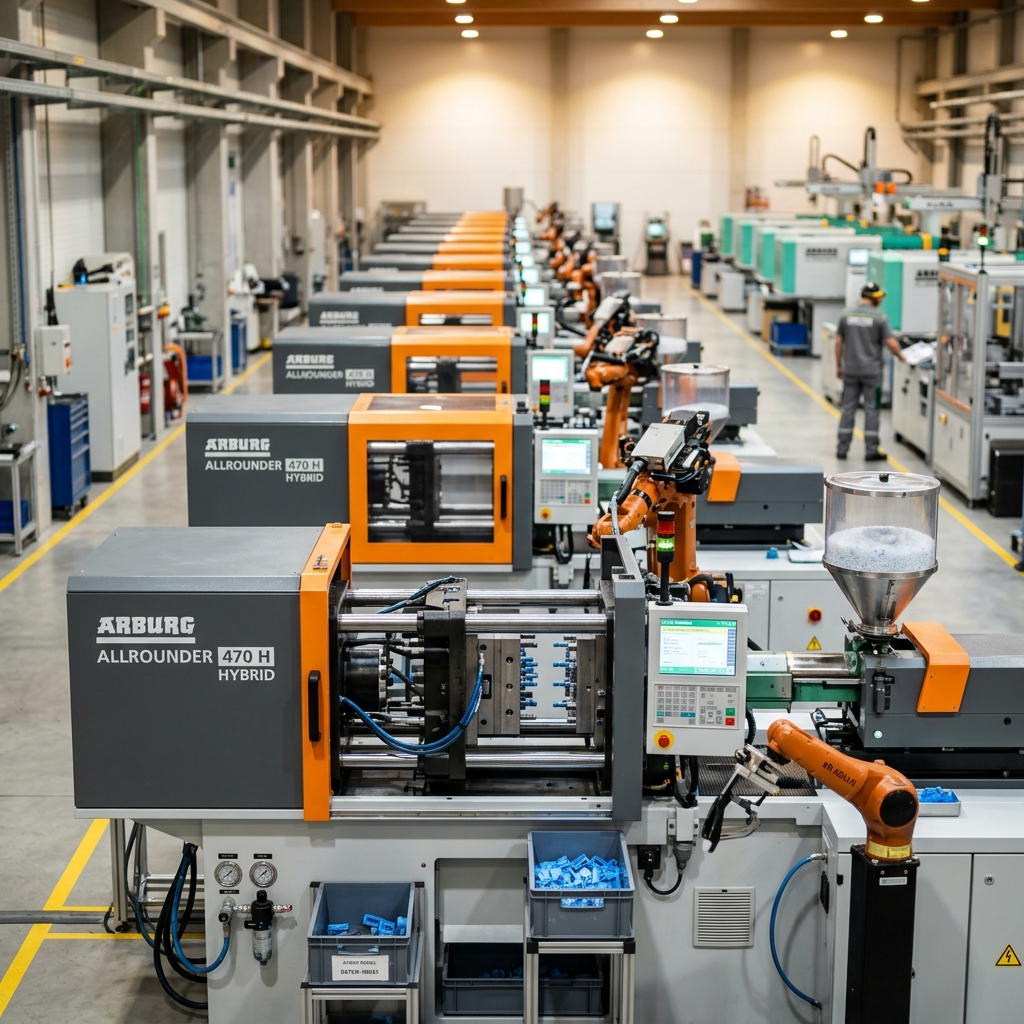
Plastic injection molding is the most widely used manufacturing process for producing high-precision, high-volume plastic parts. However, one of the biggest challenges in molding is managing plastic shrinkage and warpage. When molten plastic is injected into a mold cavity at high temperature and pressure, it begins to cool. As it transitions from a liquid to a solid, the plastic shrinks. If this shrinkage is uneven, internal stresses are locked in, causing the part to bend, twist, or warp out of shape. At ThinkToReality, our tooling division combines state-of-the-art mold flow simulation software with robust DFM engineering to offset these shrinkage factors before cutting tool steel.
Understanding the difference between nominal shrinkage (which can be offset by scaling the mold cavity up) and differential shrinkage (which causes warpage) is essential for any product designer. This guide explains the key causes of warping and how to prevent it.
1. The Importance of Uniform Wall Thickness
Thick sections of a plastic part take longer to cool than thin sections. This cooling rate differential causes uneven shrinkage, pulling on the surrounding thin walls and causing warpage. To prevent this, always maintain a uniform wall thickness throughout the part. If thick features like bosses or ribs are required, hollow them out (core out) from the back to keep the wall thickness consistent.
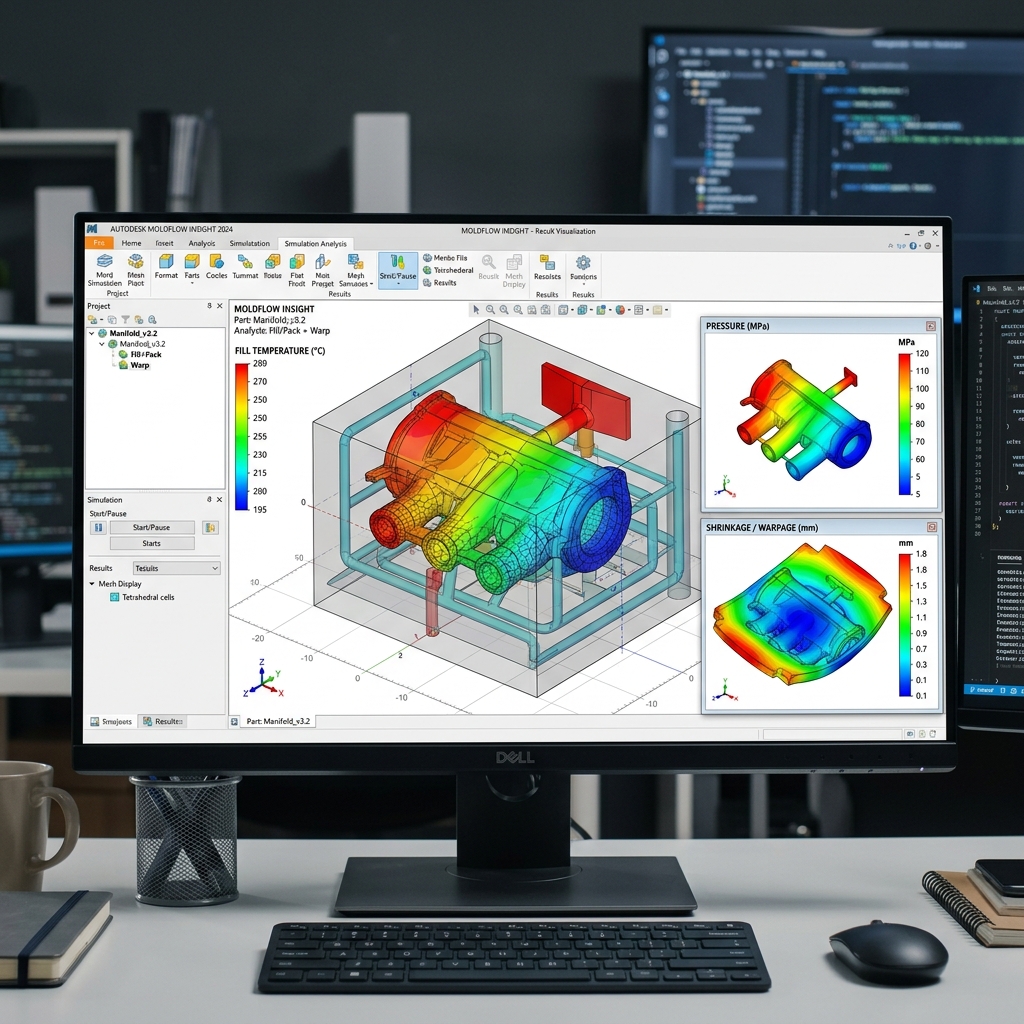
Mold flow analysis software display showing a part's color-coded thermal distribution and predicted warpage zones.
2. Gate Placement and Molecular Orientation
The gate is where plastic enters the cavity. As the polymer flows, the long-chain molecules align parallel to the flow direction. Plastic shrinks more along the direction of flow than perpendicular to it, leading to directional shrinkage differences. ThinkToReality's tool designers place gates strategically to ensure the flow path is uniform, minimizing warping and weld line formations.
3. Material Selection and Crystalline Structures
Semicrystalline plastics (like Polypropylene, Nylon, and Polyethylene) have a highly ordered molecular structure when solid, resulting in high shrinkage rates (1.5% to 3.0%) and a high risk of warpage. Amorphous plastics (like ABS, Polycarbonate, and Polystyrene) solidify in a random arrangement, shrinking much less (0.4% to 0.7%) and remaining dimensionally stable. For high-precision casings, amorphous plastics are preferred.
4. Optimizing Mold Cooling Channels
If the temperature of the mold's core side differs from the cavity side, one side of the part will shrink faster than the other, bending the part as it ejects. Designing balanced, high-efficiency cooling channels throughout the mold is critical to maintaining a uniform temperature. ThinkToReality utilizes CNC-drilled cooling loops and conformal cooling paths for complex molds to ensure rapid, uniform heat dissipation.
Conclusion: Pre-Planning Saves Costs
By maintaining uniform wall thicknesses, selecting the right polymer, and optimizing mold cooling loops, you can completely eliminate part warpage. Working with ThinkToReality gives you the advantage of detailed mold flow simulations during the design phase, saving you time and cost on tool modifications. Contact us to submit your CAD file for a mold feasibility study.
Related Insights
Sheet Metal Design & Precision Fabrication Guide: DFM Guidelines, Bending Tolerances & Manufacturing in India
A definitive engineering guide to precision sheet metal design and custom fabrication in India. Learn essential DFM rules, K-factor & bend deductions, CNC fiber laser cutting, press brake forming, materials, and regional manufacturing across Delhi NCR, Pune, Bengaluru & India.
Industrial 3D Printing Services in India: Technologies, Materials, Costing & Scale Production Guide
A comprehensive guide to industrial 3D printing in India. Compare FDM, SLA, SLS, and DMLS metal technologies, engineering materials, cost calculations, and batch manufacturing workflows.