
Rapid Tooling vs. Production Tooling: Choosing the Right Mold Material for Low-Volume Production
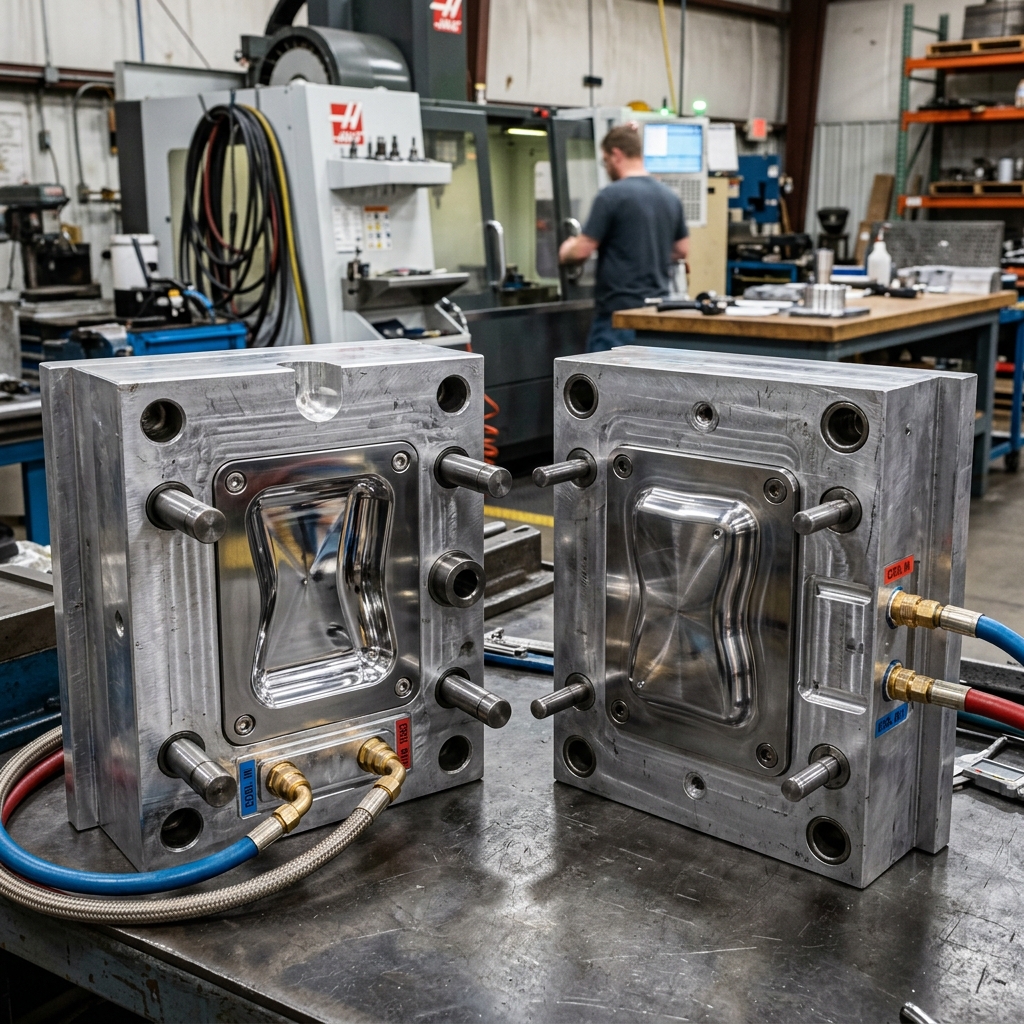
When transitioning a plastic product design into volume manufacturing, the biggest upfront cost is mold tool fabrication. Molds must withstand high injection pressures and temperatures over thousands of cycles. Depending on your production volume and budget, you must choose between rapid tooling (using aluminum or soft steel molds) and traditional production tooling (using hardened steel molds). At ThinkToReality, our mold division designs and machines both rapid and production molds, helping clients scale up their manufacturing path efficiently.
Choosing the wrong tool material can result in tool wear, mold alignment issues, or unnecessary upfront capital investment. This guide outlines the key differences between rapid tooling and production tooling to help you select the right method.
1. Mold Materials and Durability
Rapid tooling typically uses high-grade aluminum alloys (like QC-10) or pre-hardened steel (like P20 or NAK80). These metals are softer, making them significantly faster and cheaper to CNC machine or EDM. However, they wear out faster under high clamping forces, limiting rapid tools to 1,000 to 10,000 parts. Production tooling utilizes high-end hardened steel alloys (like H13, S136, or 718H). Hardened steel tools are extremely durable, resisting wear over 100,000 to 1,000,000+ cycles, making them the standard choice for high-volume automotive and consumer goods production.
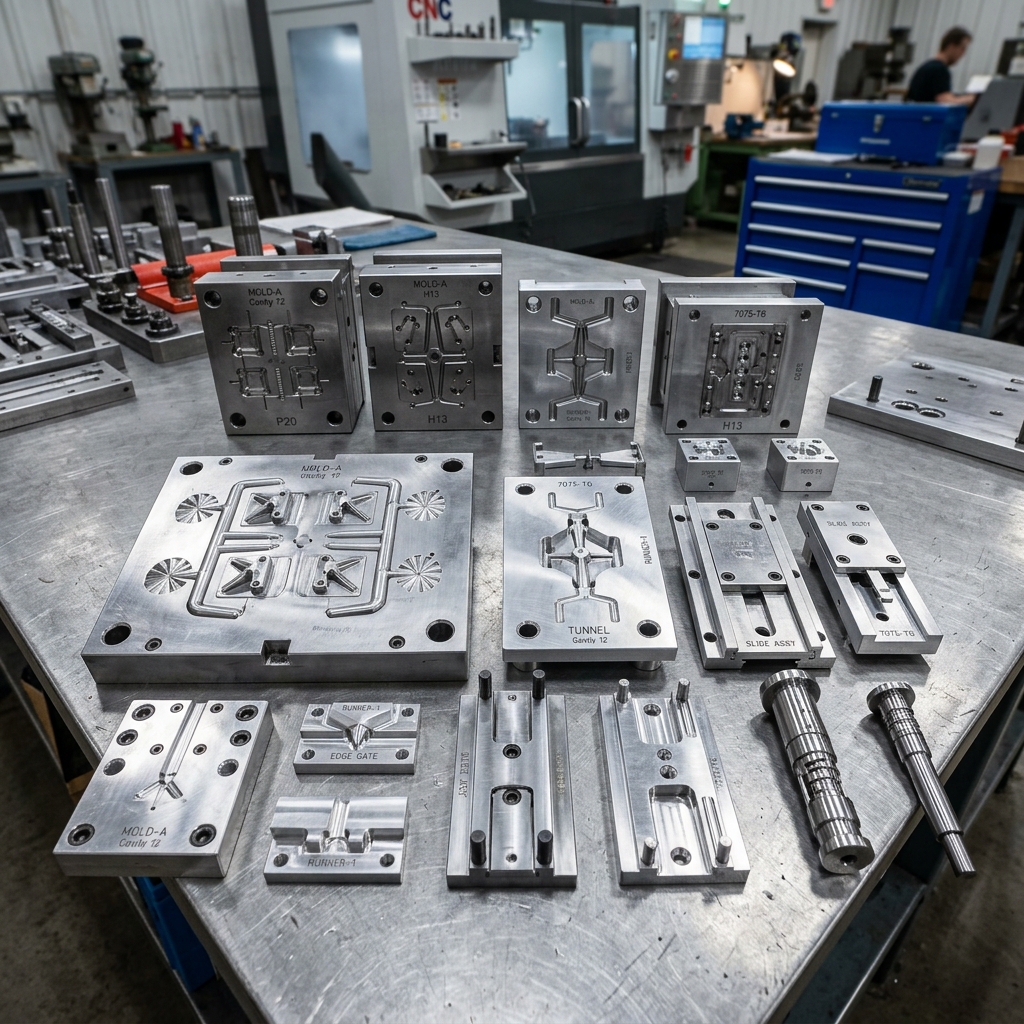
Custom machined mold cores, slides, and plate setups prepared for rapid plastic injection runs.
2. Tooling Lead Times and Production Speed
Aluminum and soft steels dissipate heat faster than hardened steels, meaning rapid tools can cool molded parts quicker, reducing injection cycle times on the shop floor. Furthermore, because soft metals are easier to machine, rapid tools can be fabricated and tested in just 2 to 3 weeks. Hardened steel tools, which require complex heat treatments and EDM grinding, take 6 to 8 weeks to complete.
3. Cost Comparison and Crossover Volumes
Rapid tooling has a much lower initial cost (typically starting around ₹1.5 to ₹3 Lakhs), making it ideal for pilot runs, test market batches, or custom parts with lower annual demand. Production tooling has a high entry cost (often starting at ₹5+ Lakhs) but drops the cost per unit to a minimum for large quantities. If your total volume requirement is below 5,000 parts, rapid tooling is the most cost-effective path.
Conclusion: A Strategic Path to Scale
If you are a startup launching a new product, start with aluminum rapid tooling to test the market, refine design features, and minimize upfront risk. Once demand scales into hundreds of thousands of units, transition to a hardened steel production mold. Partnering with ThinkToReality ensures you get expert tool designs for both rapid and production molds, providing a smooth path from early prototyping to high-volume manufacturing.
Related Insights
Sheet Metal Design & Precision Fabrication Guide: DFM Guidelines, Bending Tolerances & Manufacturing in India
A definitive engineering guide to precision sheet metal design and custom fabrication in India. Learn essential DFM rules, K-factor & bend deductions, CNC fiber laser cutting, press brake forming, materials, and regional manufacturing across Delhi NCR, Pune, Bengaluru & India.
Industrial 3D Printing Services in India: Technologies, Materials, Costing & Scale Production Guide
A comprehensive guide to industrial 3D printing in India. Compare FDM, SLA, SLS, and DMLS metal technologies, engineering materials, cost calculations, and batch manufacturing workflows.