
Silicone Vacuum Casting: How to Create High-Quality Polyurethane (PU) Prototypes at Low Cost

During the product development cycle, designers and engineers often require a pilot batch of plastic parts (typically 10 to 100 units) to perform functional field tests, marketing demonstrations, or early certifications. While 3D printing is excellent for single prototypes and injection molding is best for high volumes, silicone vacuum casting is the ideal method for low-volume production. At ThinkToReality, our custom vacuum casting services deliver production-grade polyurethane (PU) parts with exceptional surface finishes and material properties at a fraction of the cost of injection mold tooling.
Vacuum casting uses liquid polyurethane resins poured into flexible silicone molds under a deep vacuum. This process ensures that no air bubbles are trapped, replicating the master model's fine textures, details, and dimensions with extreme accuracy. In this guide, we explore the step-by-step process and the key benefits of vacuum casting.
The Vacuum Casting Workflow
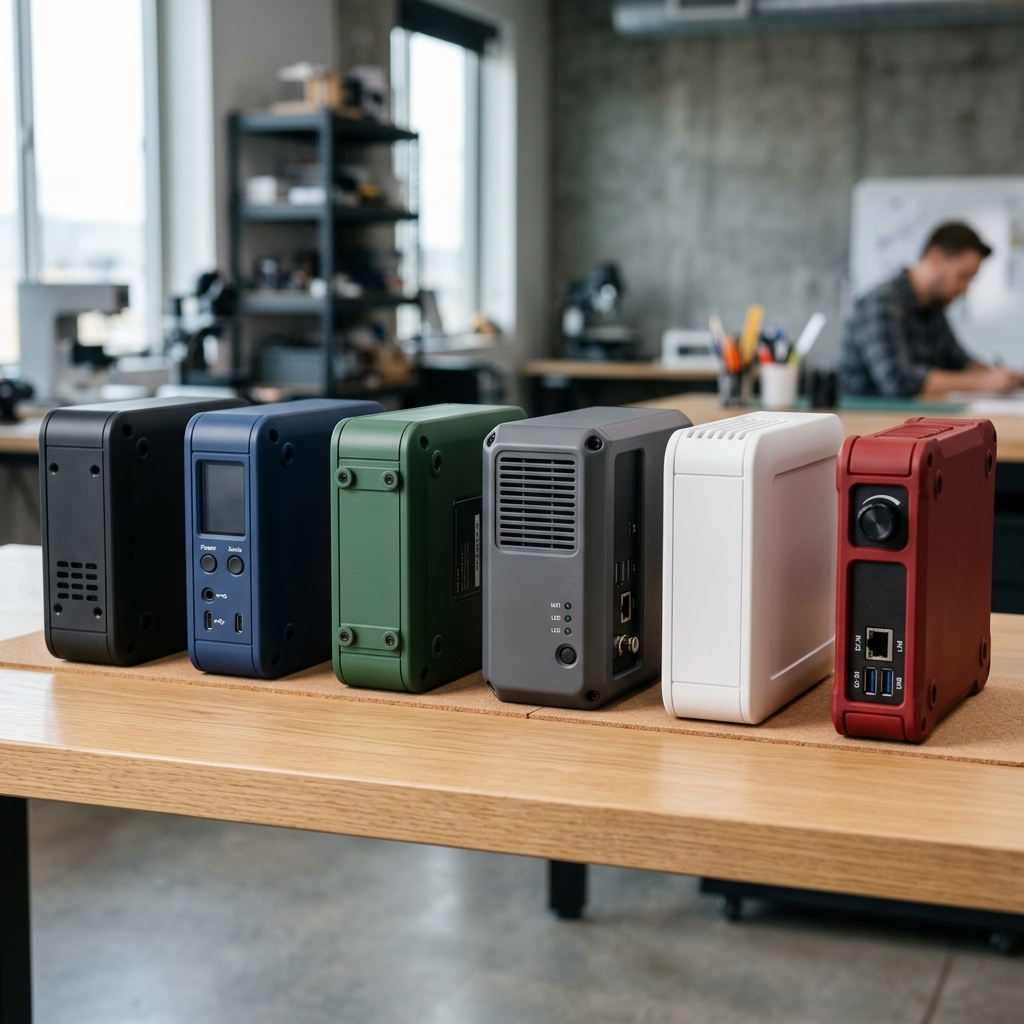
A batch of custom cast polyurethane electronics enclosures displaying high-fidelity details and smooth finishes.
Exceptional Material Properties and Colors
Polyurethane resins come in a wide range of formulations that replicate engineering plastics. ThinkToReality offers PU resins that mimic the properties of ABS (rigid and impact-resistant), Polycarbonate (transparent and impact-resistant), Polypropylene (flexible and elastic), and TPE/Rubber (soft and flexible). Parts can be colored during the mixing stage, eliminating the need for painting.
Conclusion
Silicone vacuum casting from ThinkToReality is the ultimate bridge between prototyping and mass production. It delivers production-quality parts, matching the look, feel, and mechanical properties of injection-molded components, without the upfront tooling expense. Contact us today to get a quote for your low-volume pilot run.
Related Insights
Sheet Metal Design & Precision Fabrication Guide: DFM Guidelines, Bending Tolerances & Manufacturing in India
A definitive engineering guide to precision sheet metal design and custom fabrication in India. Learn essential DFM rules, K-factor & bend deductions, CNC fiber laser cutting, press brake forming, materials, and regional manufacturing across Delhi NCR, Pune, Bengaluru & India.
Industrial 3D Printing Services in India: Technologies, Materials, Costing & Scale Production Guide
A comprehensive guide to industrial 3D printing in India. Compare FDM, SLA, SLS, and DMLS metal technologies, engineering materials, cost calculations, and batch manufacturing workflows.