
Design Guide for IP-Rated Sheet Metal Enclosures and Casings
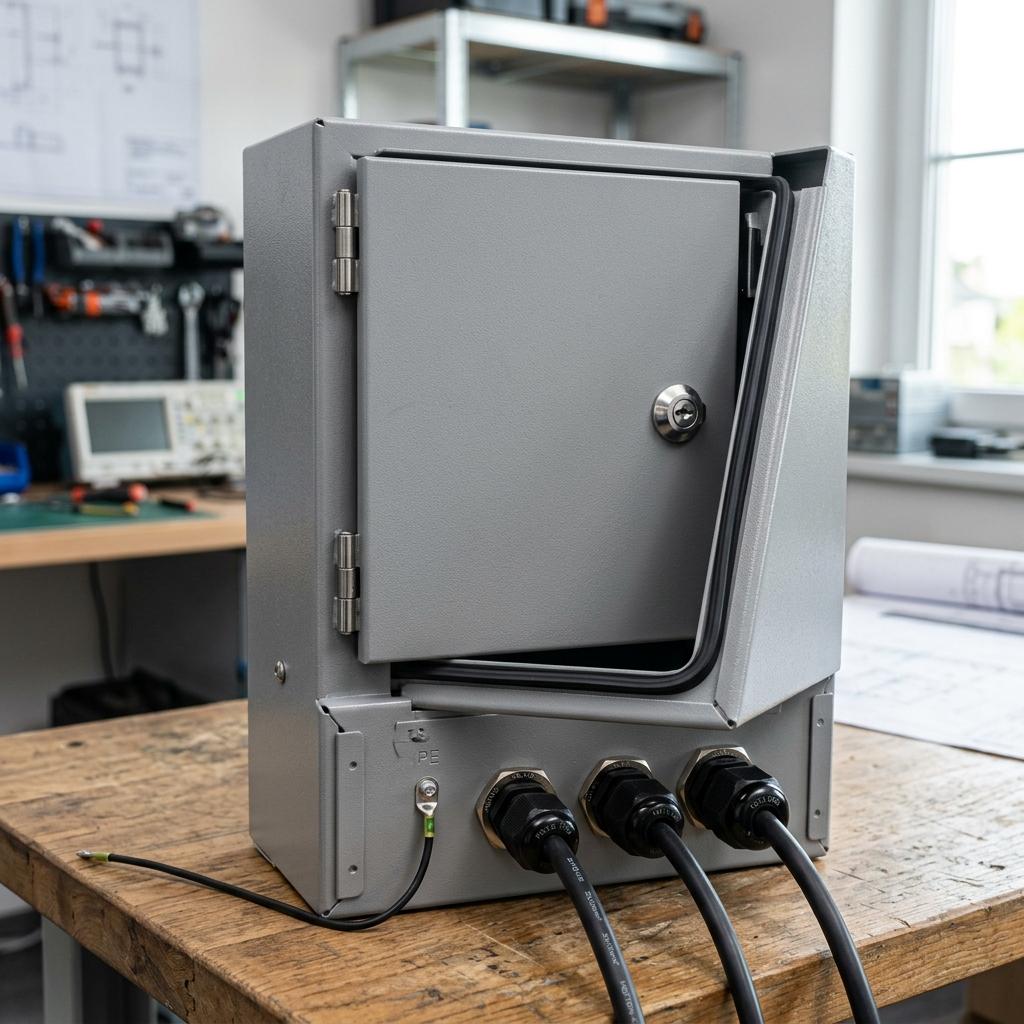
Sheet metal fabrication is the preferred manufacturing method for producing durable housings, electrical box casings, and machinery enclosures. For outdoor, industrial, or medical applications, these enclosures must protect internal components from dust, dirt, and water ingress. Designing enclosures to meet specific Ingress Protection (IP) ratings requires careful planning of seams, gaskets, and bends, a service ThinkToReality specializes in. We ensure your housing survives harsh field environments.
An enclosure's design must account for metal tolerances, thermal expansion, and locking mechanisms. Standard flat sheet layout rules must be optimized to ensure corners align tightly without leaving gaps. ThinkToReality's engineering team works closely with designers to define bend lines, weld seams, and gasket tracks.
Deciding on the Target IP Rating
The IP rating system consists of two digits. The first digit (0 to 6) represents protection against solid particles like dust. The second digit (0 to 9K) represents protection against liquids. Common targets for ThinkToReality's custom enclosures include:
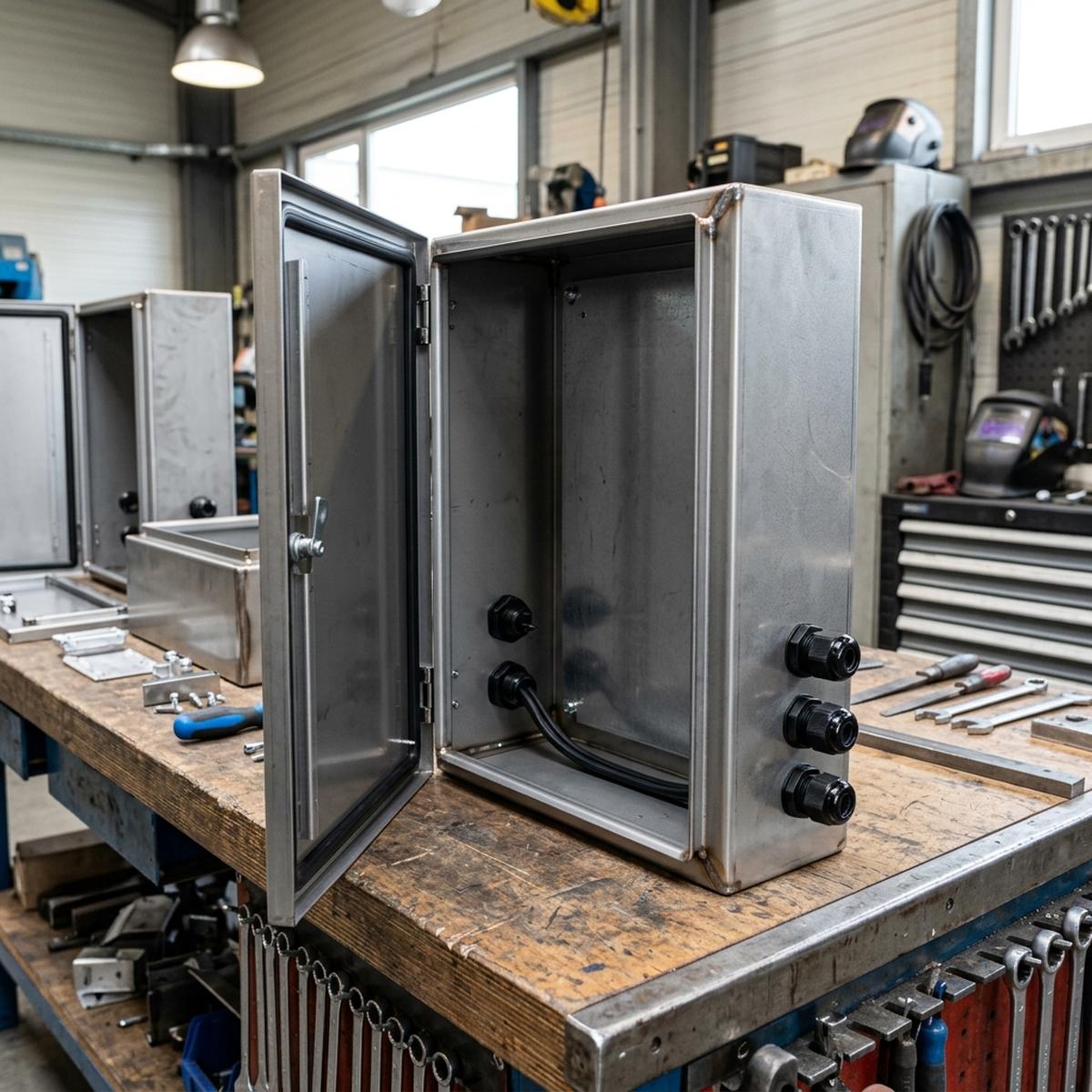
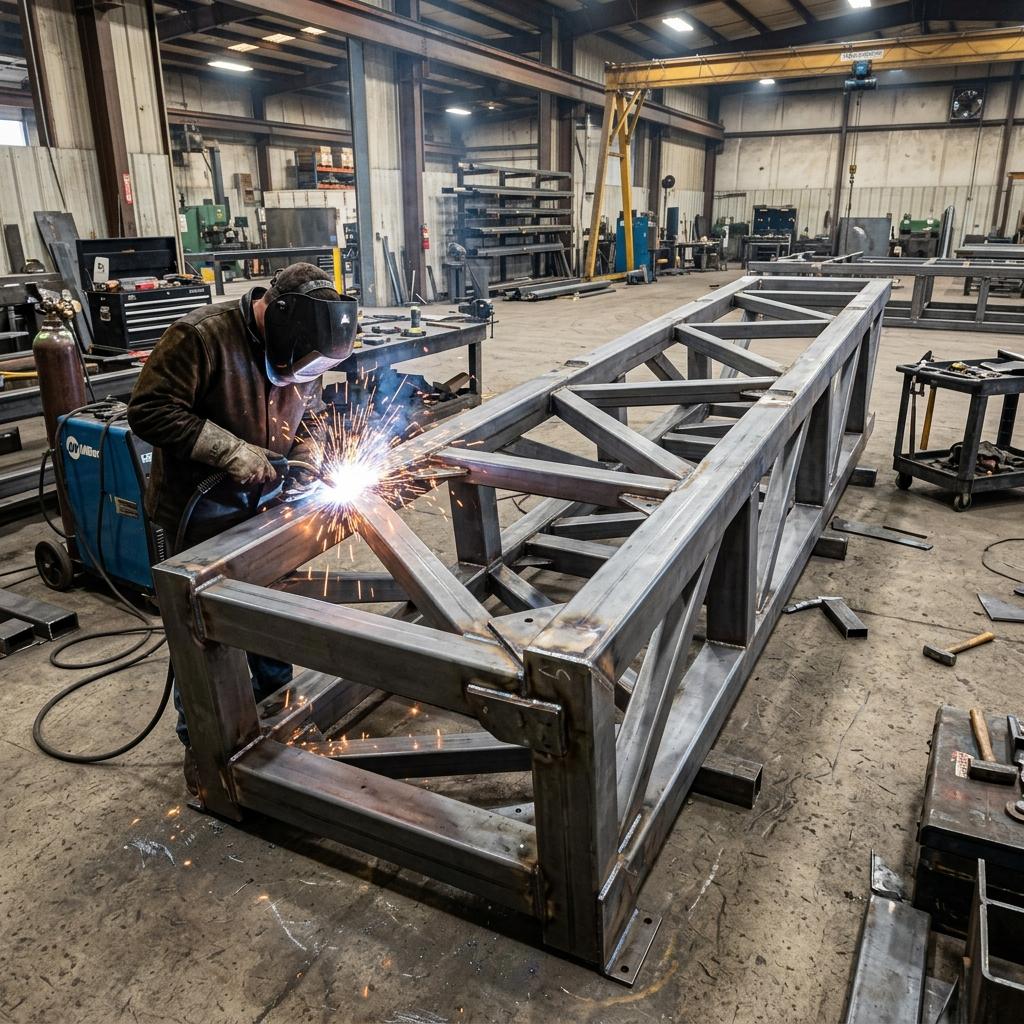
Weatherproof gasket mounting frames and structural sheet layouts produced by ThinkToReality.
* **IP54:** Protects against dust deposits and splashing water from any direction. Suitable for indoor industrial environments.
* **IP65:** Complete dust protection and resistance to low-pressure water jets. Perfect for general outdoor applications.
* **IP66:** Complete dust protection and resistance to high-pressure heavy seas or powerful jets. Required for harsh outdoor or wash-down conditions.
Key Design Rules for IP-Rated Enclosures
1. **Gasket Selection and Channels:** A reliable seal is critical. ThinkToReality's enclosures incorporate a continuous channel formed along the mating door frame to hold a compressed gasket (such as polyurethane foam or EPDM rubber profiles). Bending metal tabs or lips to compress the gasket evenly ensures a water-tight fit.
2. **Overlapping Joints and Water Sheds:** Avoid straight mating seams. Use bent flanges to create overlapping labyrinth joints or water sheds. These guide running water away from the gasket face and prevent direct fluid paths into the cabinet.
3. **Secure Latching and Hinging:** Uneven compression is a leading cause of gasket seal failures. ThinkToReality's fabrication process spaces latches, locks, or fasteners correctly along the door frame to distribute compression pressure evenly across the gasket length.
4. **Ventilation and Cable Entry Protection:** If the enclosure houses components that generate heat, ventilation is required. Use specialized IP-rated louvers, hoods, or breathable vents to keep water out. Use PG or metric cable glands to seal cable entry holes.
Summary
Designing high-performance IP-rated enclosures requires a combination of precise sheet metal CAD layout, robust gasket compression profiles, and proper latching mechanics. Working with an experienced sheet metal fabricator like ThinkToReality ensures your design translates into a reliable, certified product.
Related Insights
3D Printing for Healthcare in India: Costs, Benefits & Use Cases
Discover how 3D printing is revolutionizing healthcare in India, from custom implants and prosthetics to surgical simulations and anatomical models.
3D Printing in Architecture: Building the Future, One Layer at a Time
Learn how architects use 3D printing to create detailed models, construct complex shapes, and turn digital concepts into physical realities.