
The New Product Development Lifecycle: From Conceptual Sketch to Mass Production
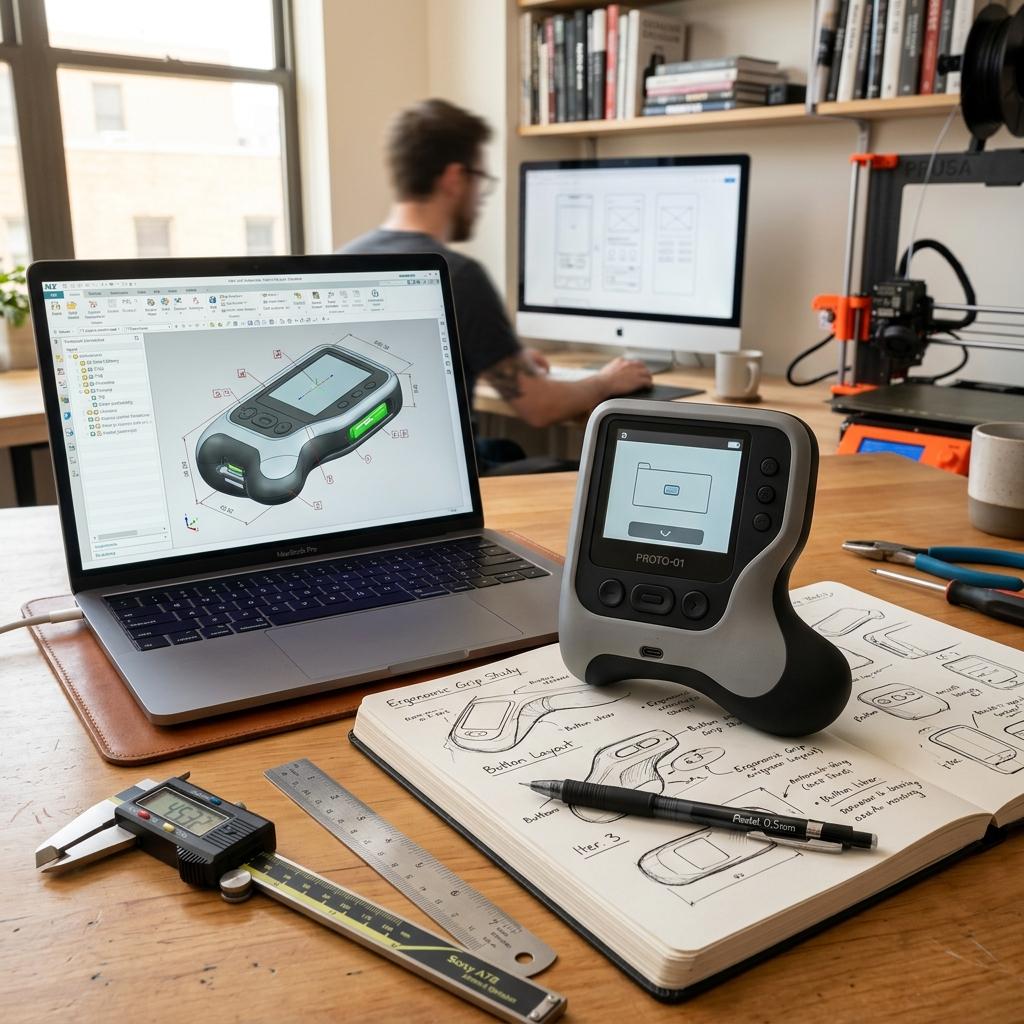
Bringing a new hardware product to market is an exciting but complex journey. To succeed, inventors and companies must navigate the New Product Development (NPD) lifecycle systematically. Working with an end-to-end partner like ThinkToReality ensures that the final design is functional, user-friendly, cost-effective, and fully manufacturable. This structured flow minimizes tooling modifications.
Many startups make the mistake of jumping directly from a visual sketch to cutting steel molds. This skipping of steps results in expensive changes when parts do not fit. ThinkToReality's NPD process highlights design-for-manufacturing (DFM) check phases to validate assembly fits early.
Phase 1: Conceptual Design and Industrial Sketching
Every product starts with an idea. In this initial stage, industrial designers sketch visual concepts, exploring layout options, user ergonomics, and styling. The goal is to define the product's overall layout and key features before moving to detailed engineering.
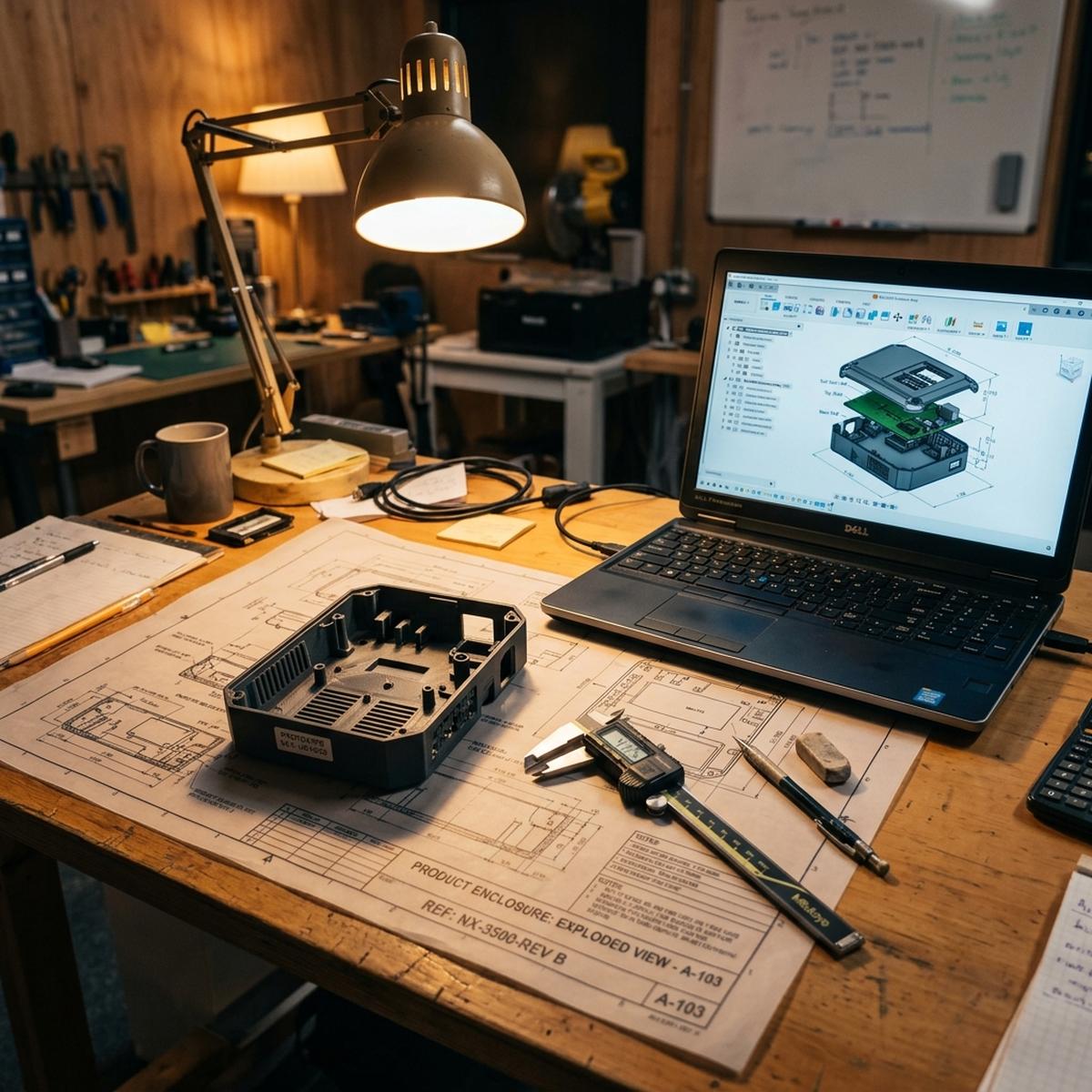
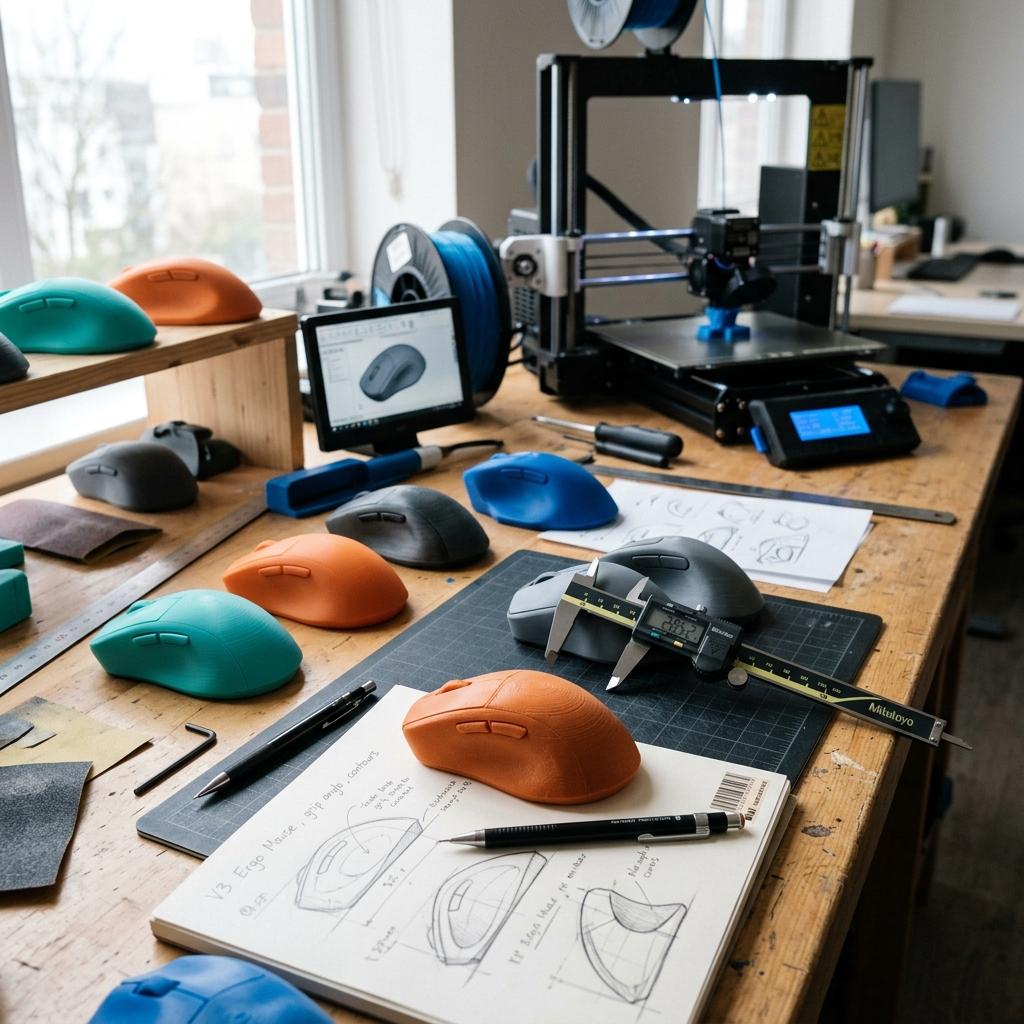
From CAD screens to functional prototypes and dimensional alignment checks at ThinkToReality.
Phase 2: 3D CAD Modeling and Mechanical Engineering
Once a concept is selected, mechanical engineers build a highly precise 3D CAD model. ThinkToReality's design team can assist with SolidWorks or Fusion 360 modeling, ensuring the internal support structures, wall thicknesses, screw boss mounts, and snapping clips maintain standard mechanical tolerances.
Phase 3: Rapid Prototyping and Iterative Testing
Before spending thousands on tooling, you must test a physical model. ThinkToReality's 3D printing platform allows engineers to fabricate prototypes in hours. These models are tested for fit, form, and mechanical function. Flaws are discovered early, allowing the design to be optimized and reprinted immediately.
Phase 4: Design for Manufacturing (DFM)
Before starting mass production, the CAD model must be adjusted for the specific production method (such as sheet metal stamping or injection molding). ThinkToReality's engineers check for uniform wall thicknesses, add draft angles so plastic parts easily release from molds, and eliminate unnecessary undercuts to reduce tooling costs.
Phase 5: Mold Tooling and Mass Production
With the design fully optimized, custom steel injection molds or stamping dies are fabricated. High-volume production starts, yielding consistent, premium parts at scale.
Conclusion
Following a structured NPD lifecycle with ThinkToReality ensures your hardware product is thoroughly validated, cheaper to manufacture, and highly reliable when it hits the market.
Related Insights
3D Printing for Healthcare in India: Costs, Benefits & Use Cases
Discover how 3D printing is revolutionizing healthcare in India, from custom implants and prosthetics to surgical simulations and anatomical models.
3D Printing in Architecture: Building the Future, One Layer at a Time
Learn how architects use 3D printing to create detailed models, construct complex shapes, and turn digital concepts into physical realities.